Do you still remember the article, "When We Journey Out to Return: Stories from Kengtung to Sri Chom Rueang," which the author previously shared? If anyone hasn't read it yet, you can catch up by clicking the link here [Read Article]. At the end of that piece, the author left us with a thought: "I’m eager to follow where this research leads, because if the 'Tai Yai Food Culture Market' proposed for the Sri Chom Rueang community actually happens, it could serve as a powerful example of cultural tourism—one that doesn't just sell a community’s age-old history, but actively builds a future rooted in a living reality."
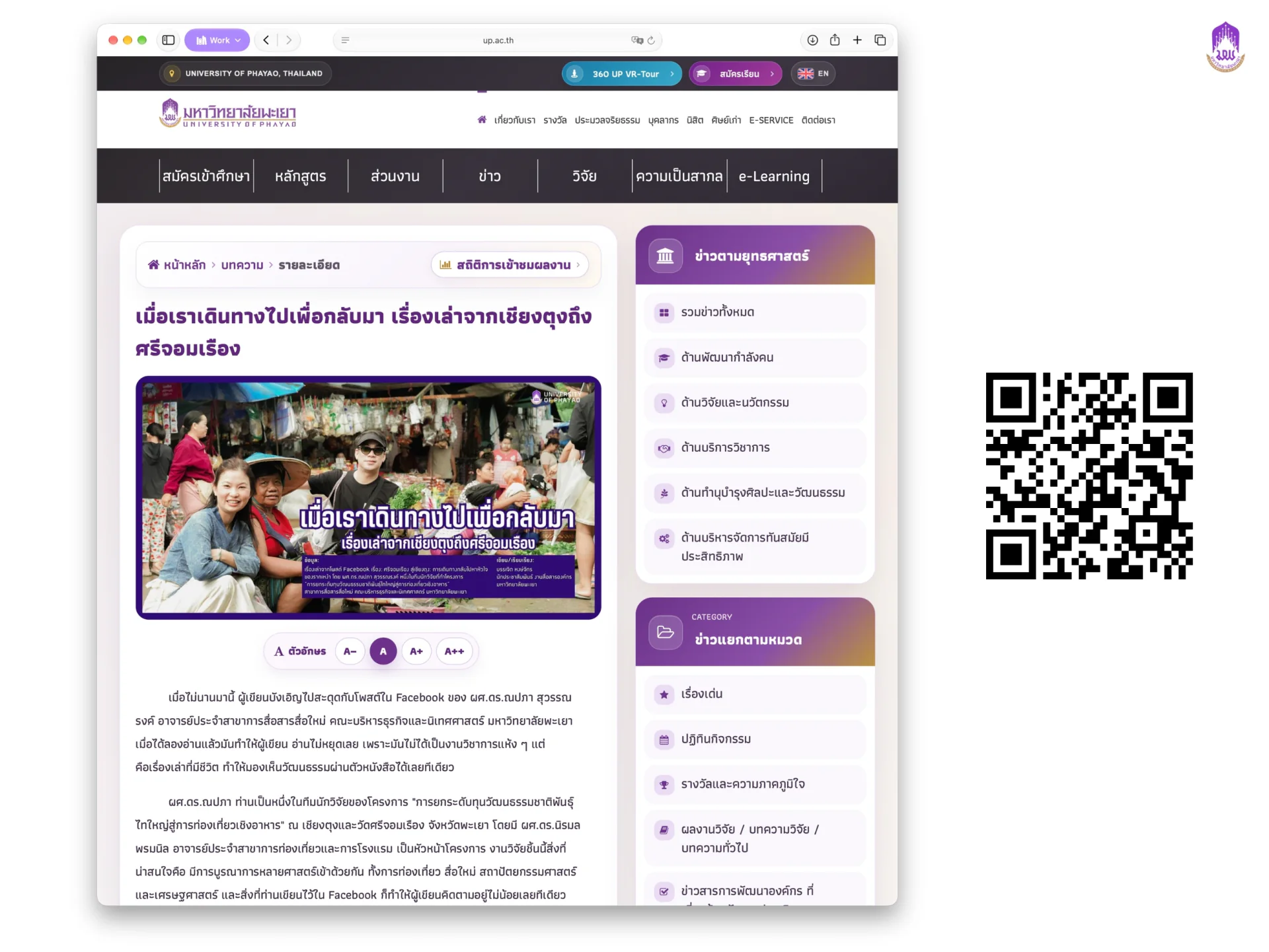
Today, the author returns to keep that promise. The market, once just a dream, officially came to life on October 29, 2026—following a research team and community delegation's journey to Kengtung—under the name "Kad Ngiao Wat Chong." Yet, after speaking with community representatives, the author realized this market isn't the finish line. It feels more like a door swinging open, inviting something entirely unexpected to step through. Let’s talk about how that unfolded.
Before diving into the market itself, let’s take a brief step back to re-familiarize ourselves with the Sri Chom Rueang community. Last time, we followed community members all the way to Shan State. This time, let's look closer to home: when and how did the roots they searched for first take root in the soil of Phayao, and what did they endure along the way?
Prosperity on a Hillside by the Ing River
The author recently learned that "Sri Chom Rueang" carries far more profound meaning than previously thought. The word "Chom" comes from the Tai Yai language, meaning a peak, summit, or a dwelling place and temple. Combined with "Rueang," which means prosperity or radiance, it translates to "The Pinnacle of Prosperity" or a flourishing sanctuary (according to information provided by the Fine Arts Department).However, locals have long affectionately shortened it to simply "Wat Chong."
In the past, this site was an overgrown forest on a high hill along the banks of the Ing River, concealing the ruins of fallen ancient structures. That changed when Tai Yai merchants from Shan State and Thai-Burmese individuals settled in Phayao to make a living. These traders were exceptionally skilled, transporting goods from the port city of Moulmein until the Mae Tam neighborhood transformed into the bustling commercial center of Phayao at the time.
People living far from home naturally sought spiritual refuge. Together, they built a temple to serve as the emotional anchor for their ethnic community. According to the National Office of Buddhism, the temple was officially established in 1893.
A Abandoned City and the Return of Its People
The history here wasn't always smooth sailing. Between 1899 and 1902, the "Ngiao Rebellion" broke out alongside administrative reforms across regional towns during the reign of King Rama V. The residents of Phayao and several Tai Yai families were forced to evacuate and seek safety in Lampang, leaving the temple and community abandoned for roughly two years. That turbulent chapter left deep scars, driving some Tai Yai locals to conceal their identity entirely.
However, around 1904, as peace returned to the region, people gradually drifted back to their ancestral homes. Community leaders of that era—such as Chong Mu Krong, Chong Song Kham, Chong Song Ong,Chong Ku, Uncle Lai Kham, and Uncle Ma—joined forces to meticulously restore the temple to its former grandeur, eventually inviting Burmese monks from Lampang to take up residence there.
When Only the Flavors Remain in the Kitchen
Time passed, and the landscape shifted. With the arrival of the railway in northern provincial towns, Chinese merchants emerged as a new economic force, shifting Phayao's commercial hub to Nong Rabu. The prominent role of the Tai Yai community in Phayao gradually receded into the background.
By the time grandchildren and great-grandchildren arrived, the Tai Yai language was rarely spoken, and traditional attire was hardly ever seen. What truly endured, however, were beliefs, Buddhist traditions, and—most visibly—food. Staple dishes like fermented soybean cakes (Thua Nao Phaen), Hang Le curry (Kaeng Hung Le), sour rice salad (Khao Som), pork rind salad (Yam Nang), and Balachong chili relish (Nam Phrik Balachong) continued to be prepared in home kitchens. Some households even turned them into livelihoods,establishing local favorites such as Grandma Yai'i's Thua Nao shop, Aunt Orn's rice shop, and P' Tom's kitchen.
The author finds this phenomenon fascinating: when language fades and traditional clothes are packed away,the kitchen becomes the final sanctuary preserving the essence of Tai Yai identity.
And this kitchen wasn't preserved through recipe books. The author spoke with Nittaya, affectionately known as "Ms. Oung," a local producer of Balachong chili paste in the community. As a third-generation resident of Sri Chom Rueang whose grandfather traveled from Kengtung, when asked who taught her the family recipe, she answered simply: "My mother, but she didn’t teach it directly. I learned by watching and absorbing it like a shadow student." That conversation made the author realize why kitchens are often called the keepers of memory.
She also recounted Tai Yai dishes from her childhood—such as Kaeng Jin Lung (minced pork curry), Nam Phrik Yow (herbal chili dip), and a bitter cassia leaf soup her family called "Tang Yow." These names serve as living linguistic fragments lingering in the kitchen long after spoken everyday language has faded away.
What Happened After Returning from Kengtung?
Anyone who read the first article likely remembers the moment when community representatives visited a morning market in Kengtung and watched locals making Khao Ram Fuen, Thua Nao Phaen, and Balachong.They exclaimed spontaneously:
"This is just like back home!"
"We should bring this back and make it at home!"
Knowing the community's history makes those two sentences carry immense weight. The author wanted to share the behind-the-scenes story of that journey as told by Ms. Oung, one of the community delegates who made the trip.
She recalled that arriving in Kengtung felt like "happiness, like coming home, like stepping onto my grandfather's birthplace." Yet, she didn't know exactly where her grandfather hailed from in Kengtung, as he passed away before she was born. She only knew what her mother had told her—that he was a native of Kengtung. While her older siblings were old enough to remember their grandfather, she never met him.Consequently, she offered a silent prayer to him during the trip, asking for a sign of which village he came from.
As their van drove back into town after visiting a village that produced Thua Nao Phaen, the vehicle passed through a settlement whose name she couldn't quite recall, remembering only that it ended with the sound "Sai." (The author surmises it was likely "Wan Sai," a village of the Tai Khen people located about 40 minutes from downtown Kengtung; the word for "village" in Tai Yai is Wan). She recalled getting goosebumps as they passed through that exact village, firmly believing her grandfather originated from there before fleeing war to settle in Sri Chom Rueang.
This is precisely what the author means when speaking of "awakened ancestral echoes." It wasn't merely a pleasant travel experience, but rather a century-old memory carried unconsciously by descendants—one that had finally been gently awakened.
Upon returning, the collaborative roadmap between the community and the research team from the University of Phayao became crystal clear. Led by Asst. Prof. Dr. Niramol Phromnil (Head of Research), alongside Assoc. Prof. Dr. Phattara Buraruk, Dr. Ruengrong Suwankan from the School of Business and Communication Arts, and Ajarn Pawin Ramingwong from the School of Architecture and Fine Arts, the goal of "bringing it back to life" was systematically executed step by step:
- 2024: Established the "Wiang Nam Tao" learning center representing ancient Phayao, allowing community members to rediscover their own Tai Yai foodways and heritage under a project led by Asst.Prof. Dr. Sahatthaya Wiset, a faculty member at Mahachulalongkornrajavidyalaya University, Phayao Campus, who invited the University of Phayao's School of Business and Communication Arts to collaborate.
- 2025: The women’s group of Wat Sri Chom Rueang united to revive the traditional Balachong recipe,supported by academic service funding from the School of Business and Communication Arts, University of Phayao.
- 2025 (or 2025/2026 milestones): The birth of the "Sang Long" brand. Together, everyone co-designed the logo and packaging, refined the recipe, and conducted nutritional analyses before introducing Balachong and authentic Ngiao cuisine to outsiders.
- 2026: Launch of a 3-year long-term research initiative funded by the University of Phayao's Frontier Area-Based grant, which began by taking community delegates to trace their roots in Kengtung.
- October 29, 2026: The successful launch of "Kad Ngiao Wat Chong" right within the Wat Sri Chom Rueang community.
The author deeply appreciates that this project did not involve researchers imposing solutions on behalf of locals. Instead, it employed a participatory process, empowering the community to trace their own roots and decide for themselves what stories to tell. This echoes the sentiment previously shared by Asst. Prof. Dr. Nappapha Suwannarong: "The answer doesn't lie in strict preservation, but in taking people back to experience it firsthand and letting them choose what to bring back."
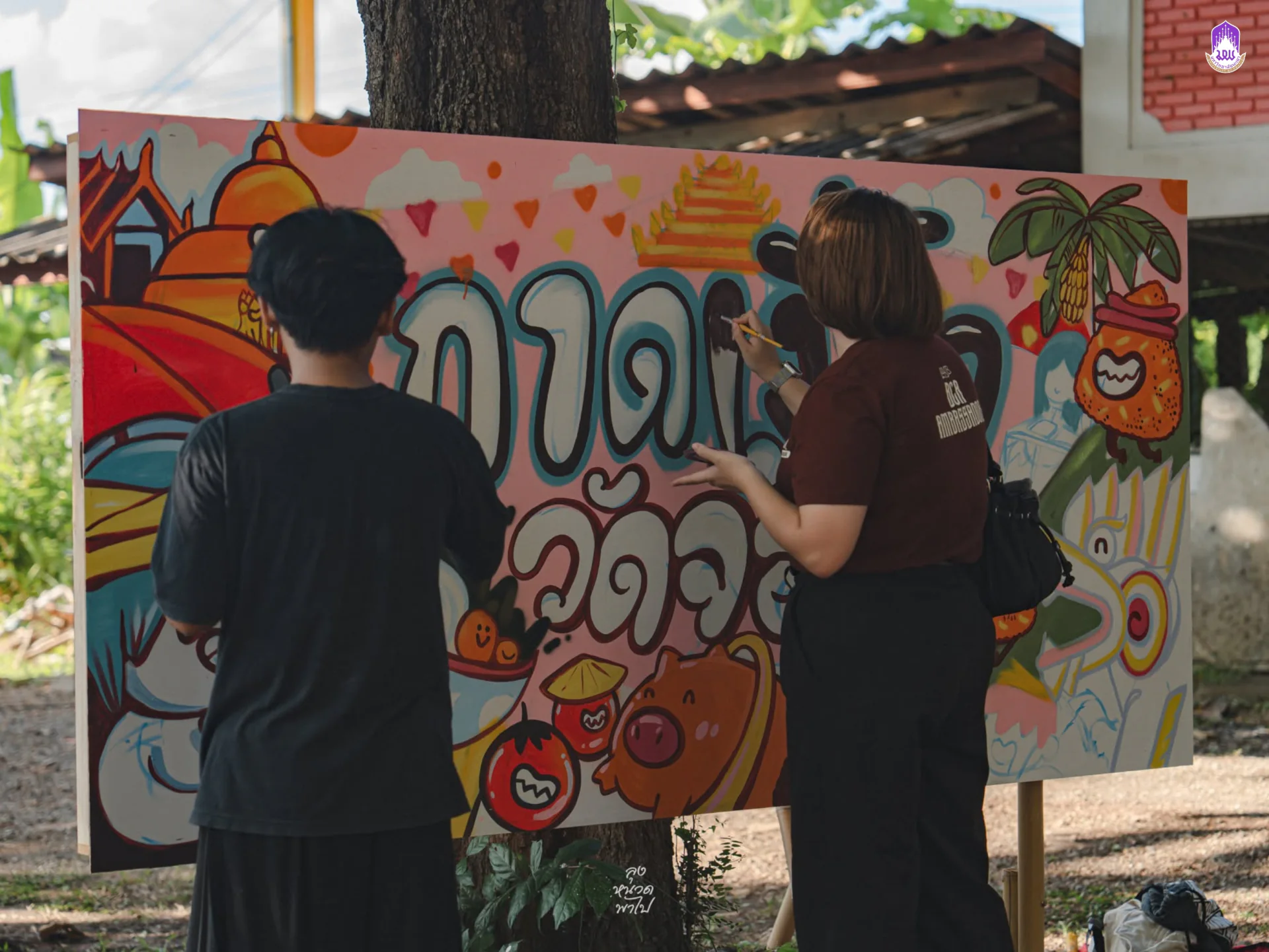
And that concept of "choosing for themselves" isn't just an idealistic catchphrase. The author has direct proof from P' Oung herself. She shared that the items brought to sell at the market were entirely decided by the community—no outsiders dictated the terms. Even the market's name didn't come from the researchers. On one occasion, when Asst. Prof. Dr. Niramol Phromnil asked what the market should be called, Ms. Oung suggested, "Since it's Ngiao food, why not call it 'Kad Ngiao'?" And since locals already called Wat Sri Chom Rueang "Wat Chong," they combined them into "Kad Ngiao Wat Chong" right then and there on the spot.
"Kad Ngiao Wat Chong": A Market Owned by the Community
And so arrived the long-awaited market: "Kad Ngiao Wat Chong," held on October 29, 2026, around the Wat Sri Chom Rueang community. It was a genuine Tai Yai cultural market entirely owned and operated by the community, serving as a showcase for the culmination of this research project under the theme: "From Kitchen to Kad Ngiao... The Hidden Cultural Roots."
The market featured over 20 varieties of authentic Tai Yai dishes to purchase and taste, hands-on workshops on traditional Tai Yai craftsmanship, live demonstrations of traditional Balachong preparation mirroring what the research team and community witnessed in Kengtung, and folk performances ranging from traditional Salo-So-Sueng music to intricate string puppet shows (Hun Sai).
The author was reminded of another quote by Asst. Prof. Dr. Nappapha from the first article: that such a market should be "a space where a single plate of food can tell the story of one's ancestors." At the time,the author thought that sounded a bit too romanticized. But after realizing that a single jar of chili paste encapsulates the journeys of Moulmein merchants, a deserted city, the painstaking restoration of a temple,and a group of homemakers reviving fading recipes, it no longer felt overly romantic at all. It was simply the truth.
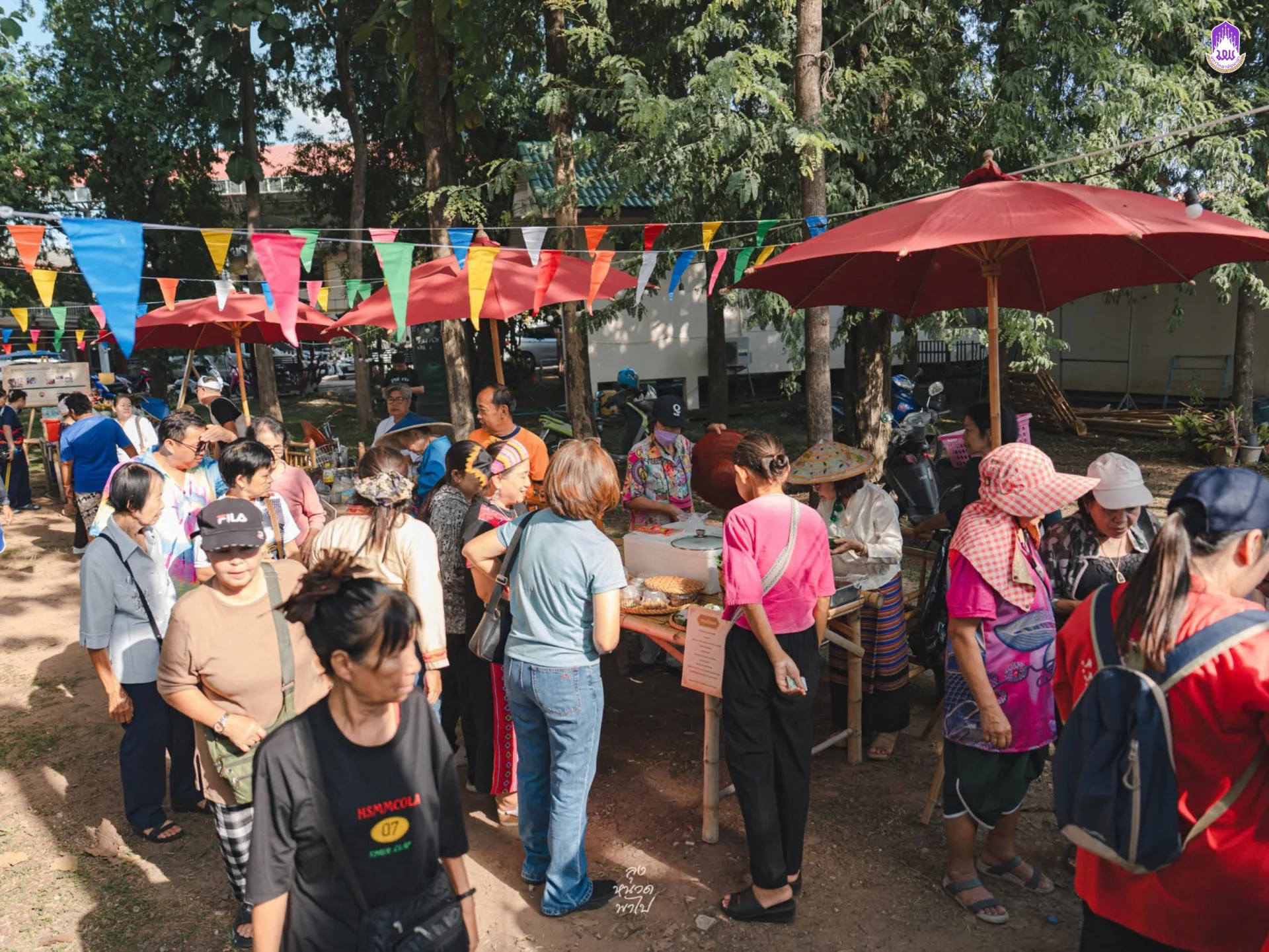
Ms. Oung didn't just talk about flavor profiles, either. Because traditional Balachong recipes used substantial amounts of oil and weren’t stir-fried to complete dryness—limiting shelf life—she proactively adjusted the recipe to use less oil and extended the cooking time to make the paste drier. That was true community agency in action. What brought a genuine smile to the author's face was hearing the glowing feedback from visitors,who praised the market’s organization and suggested it be held monthly or at least weekly—even if Ms. Oung humorously lamented that everything sold out long before the event concluded.
Another striking detail for the author was how the term "Ngiao" was embraced and used as the market's name with profound pride. Historically, the word had been tied to an era when people had to flee and conceal their heritage. Yet when Ms. Oung was asked how she felt if someone called her a "Ngiao person," she replied simply: "I don't mind at all, because we truly are Ngiao people." Being of mixed Ngiao and Northern Thai descent, she only heard the term "Ngiao Rebels" when she was older, with no lingering historical trauma attached because her family’s ancestral backstory had never been an explicit fixture of her upbringing.
Her response prompted deep reflection: the exact same word can carry vastly different weight across generations. The generation forced into hiding felt one way; the generation unaware of their history felt another; and this new generation, seeing the word "Ngiao" proudly displayed on bold banners, feels something entirely different. She recounted how her grandfather’s sword, carried with him when fleeing the war in Kengtung, was kept tucked away in a room until rumors suggested it had taken lives, prompting the family to safely deposit it at the temple. This history doesn't suggest we should cloak our pride in secrecy; rather, it highlights that the heritage of war refugees carries both elements we wish to share proudly and elements we prefer to leave behind. What this market achieved was providing a safe space for the younger generation of Ngiao descendants to decide on their own terms how to carry that identity forward. For the author, that is the most meaningful kind of homecoming.
A Market Is Not a Destination, But a Tool
There is another vital dimension to highlight here: the things that blossomed at the market extended far beyond food alone.
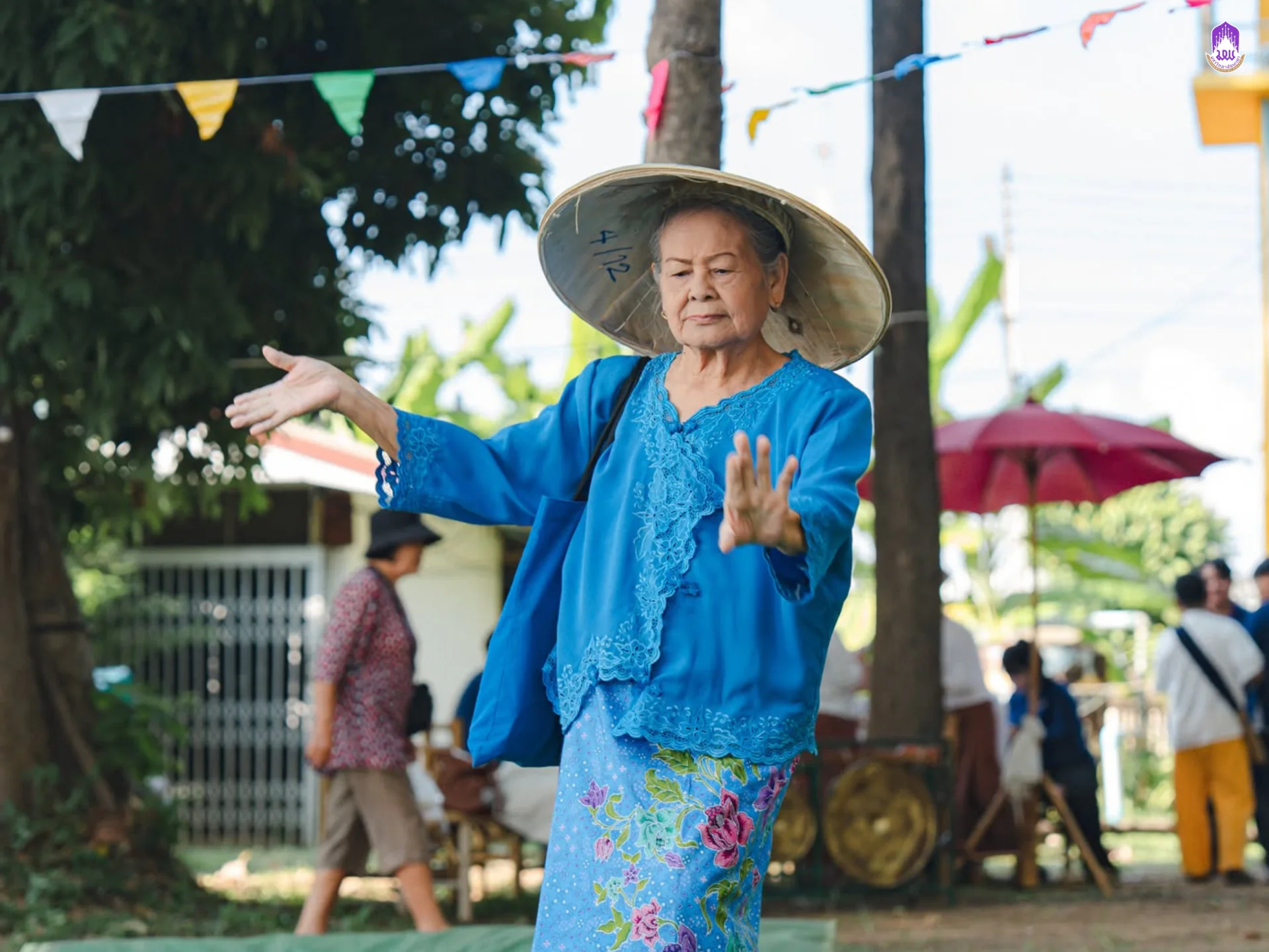
Ms. Oung shared that she never expected to witness traditional performances like the Bird Dance, the To (mythical beast) Dance, the Sword Dance, and the Klong Sing Yong drum parade—art forms she had only seen as a child at Wat Chong. Seeing them again filled her with joy, instantly reconnecting her with the world of her parents' generation. The sword dancer at the event was none of other than Yai Phen, her cousin. Yai Phen grew up during the time of her grandfather (Sang Long) and was taught authentic Tai Yai dance forms back then. Having not danced in years—now living in Bangkok with her children—Yai Phen traveled back specifically for this occasion, standing as the sole person left in the community who still retained the art. The author couldn't help thinking: without this market, there would have been no reason to call her back, and no one would have realized those dance movements still existed.
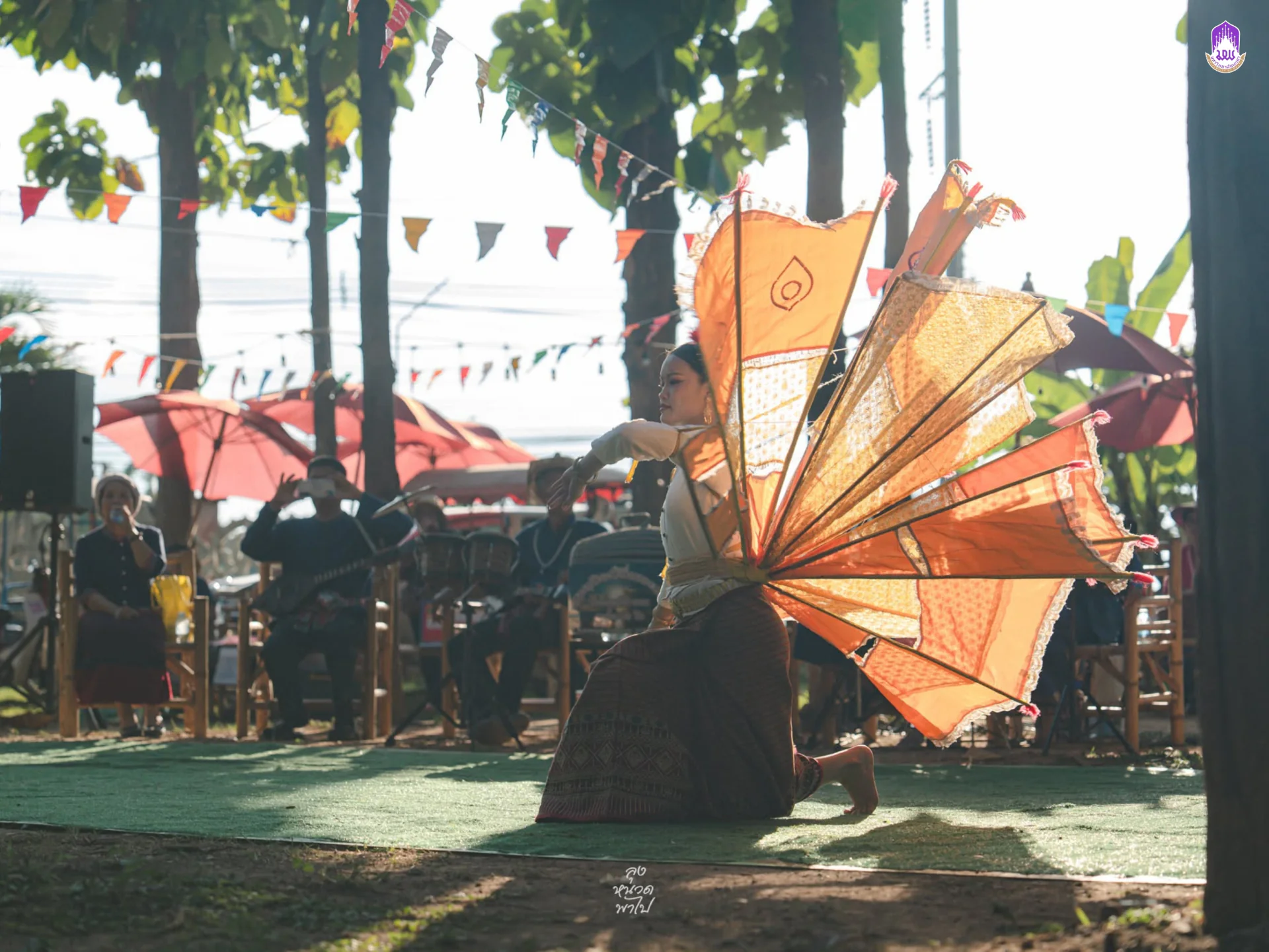
Moreover, the community has now begun discussions about establishing a "Ngiao Museum" at Wat Chong to preserve vintage photographs and historical artifacts, driven by a shared fear that the younger generation might otherwise lose touch with their heritage. None of these organic community initiatives were part of the original research blueprint for the Balachong project; they materialized simply because a dedicated space was created to let them happen.
Looking at it this way, if food served as the initial doorway, what followed naturally were performances, attire,traditions, arts, literature, and language—all of which already belonged to the community all along, simply lacking a platform to step out into the light.
More Than Chili Paste: A Mirror
In the first article, Kengtung was likened to a grand mirror reflecting the roots of the Sri Chom Rueang people.This time, the author witnessed another mirror manifested right within the event: food and culture—especially Balachong chili paste, the quintessential emblem of the Tai Yai identity. It is far more than just a condiment; it is a mirror reflecting the survival, identity, and enduring presence of the Tai Yai people.
Today, the villagers are no longer merely traveling to look into mirrors in distant towns; they are actively constructing their own mirror right at home, allowing their descendants and visiting guests to clearly see who they are.
An Ending That Is Only the Beginning, and a Challenge to Researchers
The author once posed the question: "What would happen if this market actually came to be?" Now, we have our answer. The market did happen, and it was far more than a fleeting festival that dissipated the moment the tents came down. It serves as the foundational milestone of a three-year journey designed to transform cultural assets into sustainable community revenue, ensure native ingredients used in Tai Yai cooking avoid extinction,and empower the community with its own self-sustaining organization long after the research team steps away.
On this final point, Ms. Oung was refreshingly direct. She noted that if the market is to run monthly or weekly as visitors desired, the community must take full ownership because universities do not have permanent budgets.Yet she expressed unwavering confidence that "the community can do it," pointing to the strength of local committees and residents who are already actively charting future directions with community leaders.
Before concluding their conversation, she extended her gratitude to the research team—from developing and refining the Balachong recipe and devising preservation techniques to extend shelf life, all the way to designing packaging—noting that several villagers have already begun earning a sustainable livelihood through the market. "To sum it up simply," she concluded, "this market has truly been a success."
However, the author feels compelled to take up a "challenge" left behind by Ms. Oung. She expressed a desire for the research team to tackle "Jin Lung" next, since current research has primarily focused on Balachong.Furthermore, if she returns to Kengtung, she hopes to encounter Khao Soi Noi—a traditional Tai Yai dish resembling steamed rice noodle rolls (Khao Griap Pak Mo) that has vanished from Sri Chom Rueang,preserved only in the memories of the oldest generation whose numbers are dwindling.
Thus, the author wishes to extend that challenge back to the research team: if the market is indeed a tool, then the metrics of success should not be limited merely to visitor headcounts or sales figures. We must also ask:How many individuals who once remained unseen have stepped forward with the confidence to say, "I can do this"? Can the research team design future iterations of the market to feature an "open plaza" capable of accommodating elements not currently on the blueprint—whether textiles, language, rituals, visual arts, or literature? And how urgently can we document the fading knowledge of the second-generation elders before culinary heritage treasures like Khao Soi Noi vanish alongside them?
A little over a century ago, the ancestors of Sri Chom Rueang returned to restore a neglected, abandoned temple. Today, their descendants journeyed to Kengtung and returned to restore something equally vulnerable:things that were quietly fading away. This time, the restoration wasn't focused on brick sanctuaries or physical structures, but rather on memory, culinary flavors, and an enduring pride in Tai Yai identity.
The author believes the saying, "Sometimes, we must travel far away just to realize that the most precious things were right inside our community all along," is no longer just a poetic quote. It has become a living reality at Kad Ngiao Wat Chong.
If you missed out on this market, there is no need to worry. In February 2027, Kad Ngiao Wat Chong will return, and moving forward, it will be held during every major temple festival. For those interested, you can follow updates via the Facebook page "Balachong By Sang Long," drop by to taste authentic Balachong in the Sri Chom Rueang community, and listen to the stories those dishes are eager to tell.
And next time, whenever a plate of food is placed before you, the author invites you to take a moment to ponder the hidden histories simmering within it—just as a single jar of chili paste once guided the author back through more than a century of this community's remarkable journey.
Credits / Special Thanks
Photo Credit Facebook Page: ลุงหนวดพาไป
Research Data: The Cultural Capital Enhancement of Tai Yai Ethnic Group towardsGastronomy Tourism in Phayao Province