Recently, I stumbled upon a Facebook post by Asst. Prof. Dr. Napapa Suwannarong, a lecturer in the New Media Communication program at the School of Business and Communication Arts, University of Phayao. Once I started reading, I simply couldn't stop. It wasn't a dry, academic paper; it was a living narrative that allowed me to vividly envision the culture through her words.
Asst. Prof. Dr. Napapa is a member of the research team behind the project "Elevating the Tai Yai Ethnic Cultural Capital for Gastronomy Tourism" at Kengtung and Wat Sri Chom Rueang in Phayao Province, with Asst. Prof. Dr. Niramol Promnil, a lecturer in the Tourism and Hospitality Management program, serving as the project leader. What makes this research particularly fascinating is its integration of multiple disciplines-combining tourism, new media, architecture, and economics. And the reflections she shared on Facebook genuinely made me pause and think.
.jpg)
More Than a Trip: Listening to the Voice of Our Roots
The story begins in a small, tight-knit community: the Wat Sri Chom Rueang community in the Mueang District of Phayao. For generations, people of Tai Yai (Shan) descent have called this place home. Their ancestors migrated and settled here, blending their heritage with the Phayao soil and living their lives to this day.
However, as time passes, some things inevitably begin to fade. Asst. Prof. Dr. Napapa wrote, "Some words are blurring, some flavors are disappearing, and some rituals exist only in the memories of our elders." This poignant realization sparked the idea to take the descendants of the Sri Chom Rueang community on a journey to "Kengtung" - a city nestled in a valley in Shan State, Myanmar, recognized as the very cradle of Tai Yai culture.
.jpg)
.jpg)
Kengtung: A Giant Mirror Reflecting the Past
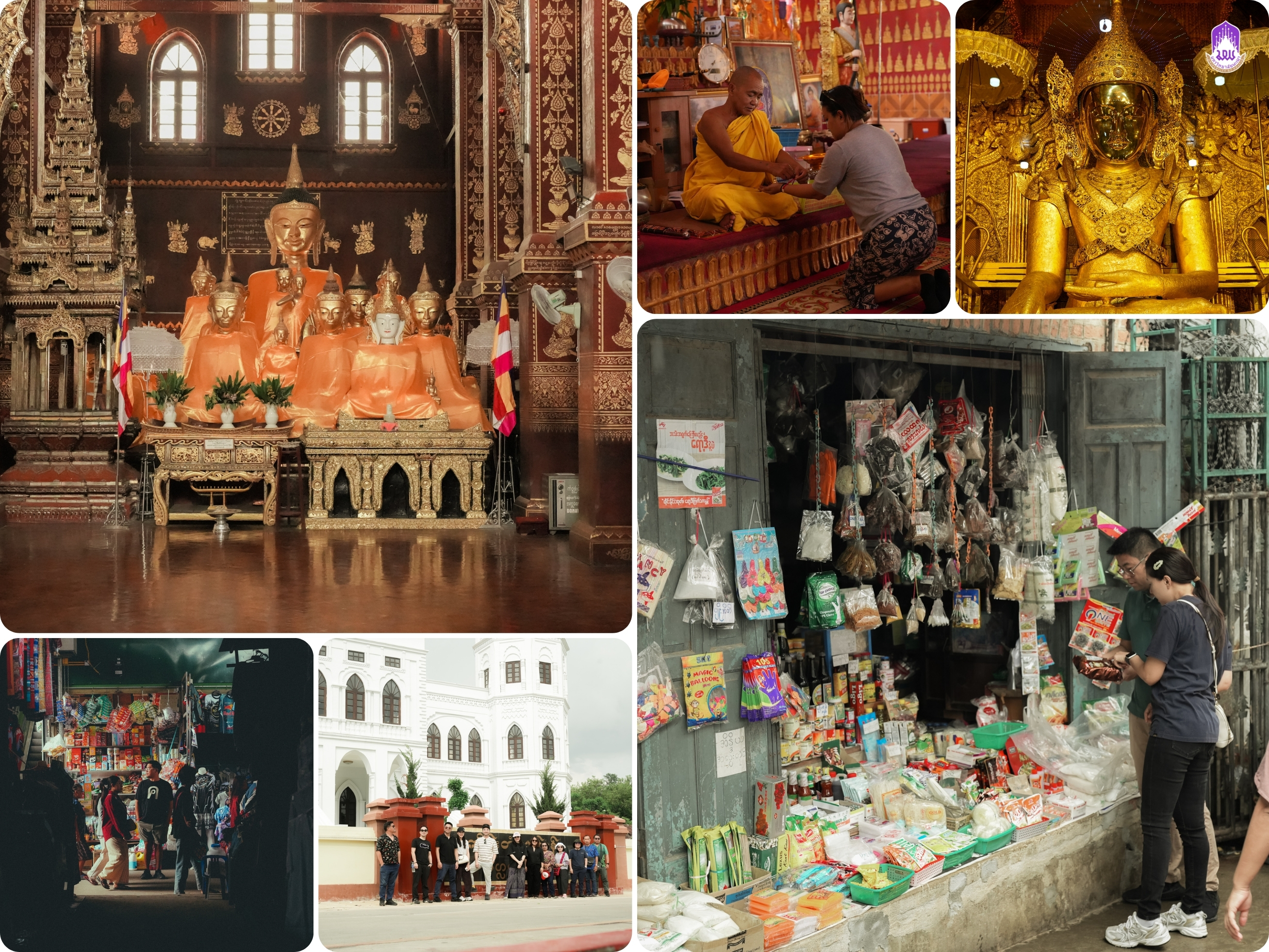
What makes the perspective of this trip so fascinating is that the research team didn't just take everyone to "look at old antiques" in various homes. Instead, they took them to "look into a mirror" to rediscover their own roots. "Kengtung is not just a beautiful city in a valley; it is a space of remembrance. It acts as a mirror, reflecting where our Tai Yai culture comes from, its history, and how it breathes."
The research team guided everyone through the local morning market (kad) to admire the traditional weaving techniques, savor the local cuisine, and observe the daily lives of the people. They also took community representatives to study the traditional production processes of local foods-from Khao Ram Puen, Khao Soi Noi, Nam Phrik Balachaung, and Kengtung sausage (Sai Ua), to visiting villages that still preserve the age-old methods of making fermented soybean sheets (Thua Nao Phaen).
Yet, what left the people of Sri Chom Rueang truly awestruck wasn't the novelty of these experiences. Rather, it was the profound familiarity; many of the things they encountered were already woven into their memories. This journey simply brought those blurry images back into sharp focus.
.jpg)
Small Phrases, Monumental Meanings
When the village representatives from the Sri Chom Rueang community saw, tasted, and felt the living Tai Yai culture in Kengtung, they spontaneously began to say:
"This is just like our home."
"My uncle used to tell me about this."
"We should definitely bring this back to do at home."
Dr. Napapa noted that while these sentences might seem ordinary, they represent the exact moment a culture begins to breathe again. Reading this, I couldn't agree more. It’s not merely a feeling; it’s the "remembrance" ingrained within people, waiting for that specific trigger to awaken it.
.jpg)
The Cultural Market: More Than Just a Marketplace
The ultimate vision the research team carried back from Kengtung is the "Sri Chom Rueang Cultural Market." This is envisioned as far more than your typical weekend market. As Asst. Prof. Dr. Napapa beautifully articulated, "The Sri Chom Rueang Cultural Market should be a stage for our roots. It must be a space where a single dish can narrate the stories of our ancestors, where a glimpse into the traditional weaving techniques can trace the migratory paths of our people, and where a single song can awaken the collective memory of the entire community."
While it sounds deeply romantic, it is, in fact, a highly tangible research objective. The team has meticulously designed this concept, featuring a local food zone, a culinary demonstration zone, and a dedicated storytelling zone. The goal is to draw tourists into a meaningful cultural immersion, ensuring they don't just buy souvenirs and leave, but actually connect with the heritage.
.jpg)
A Lesson for Every Community
What I love most about Dr. Napapa’s account is the human-first philosophy behind this journey. She stated, "Culture will not survive simply by being locked away in a museum. Culture survives when people bring it back into their daily lives—when they tell it, make it, eat it, wear it, sing it, play it, and share it in the real world."
This isn't just about the Tai Yai community in Phayao; it resonates with every community around the globe striving to preserve their identity amidst the rapid currents of technological change. If we fail to protect these identities and they are lost, they can never truly be reclaimed. Perhaps the answer doesn't lie in strict, rigid conservation, but rather in guiding people back to experience their roots firsthand, allowing them to decide for themselves what they wish to bring back into the present.
I, for one, am eager to follow the progress of this research. If the upcoming "Ngio (Tai Yai) Gastronomic Cultural Market" at the Sri Chom Rueang community comes to fruition, it will undoubtedly serve as a premier model for cultural tourism. It won't just be about commercializing the community's antiquity; it will be about building a sustainable future upon a very real, existing foundation.
Asst. Prof. Dr. Napapa concluded with a profound thought: "Sometimes, we have to travel far away to realize that the most precious things have been in our community all along." I believe this perfectly encapsulates the entire endeavor. A heartfelt thank you to Asst. Prof. Dr. Napapa Suwannarong for this beautiful story that has guided us back to truly appreciate the value of our roots.
.jpg)